
Licensed Arizona Concrete Contractor · Founded 2016
Commercial Concrete in Phoenix, AZ
We pour and repair commercial concrete in Phoenix: sidewalks, ADA walkways, dumpster pads, loading areas and reinforced slabs. We schedule the work around your business, because a closed entrance costs you money.
Credential
Licensed AZ Contractor
Tenure
Founded 2016
Roots
Local Phoenix Team
Upfront
Free Estimates
Climate Spec
Heat, Monsoon & Soil
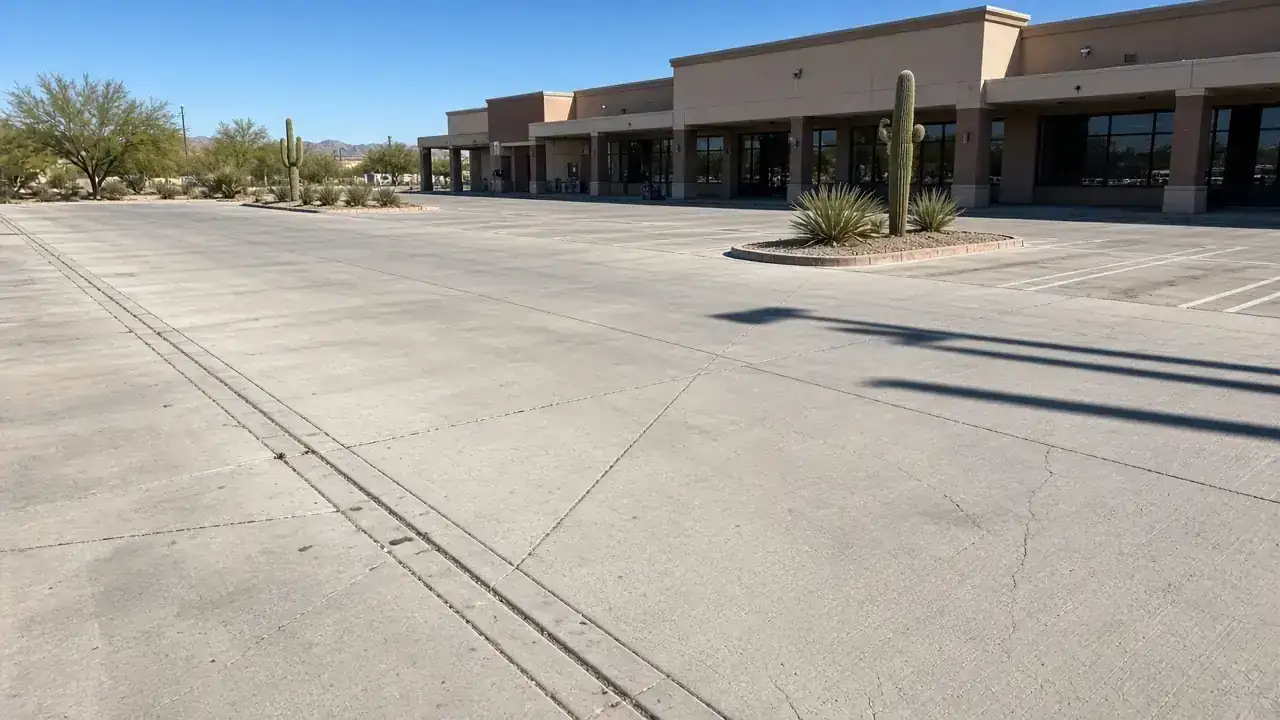
Proven Arizona Heritage
Serving Phoenix property owners since 2016
Commercial concrete work we do
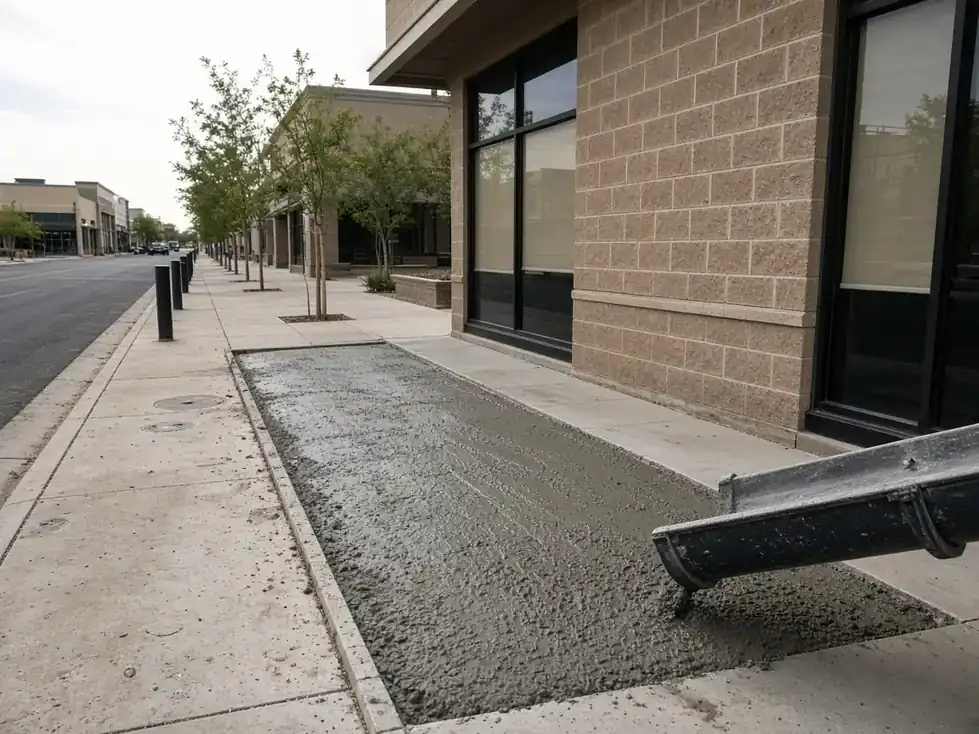
Sidewalks and entries
Customers walk these every day. We build them level, with joints in the right places. We also fix the trip hazards that cracked or lifted slabs create.
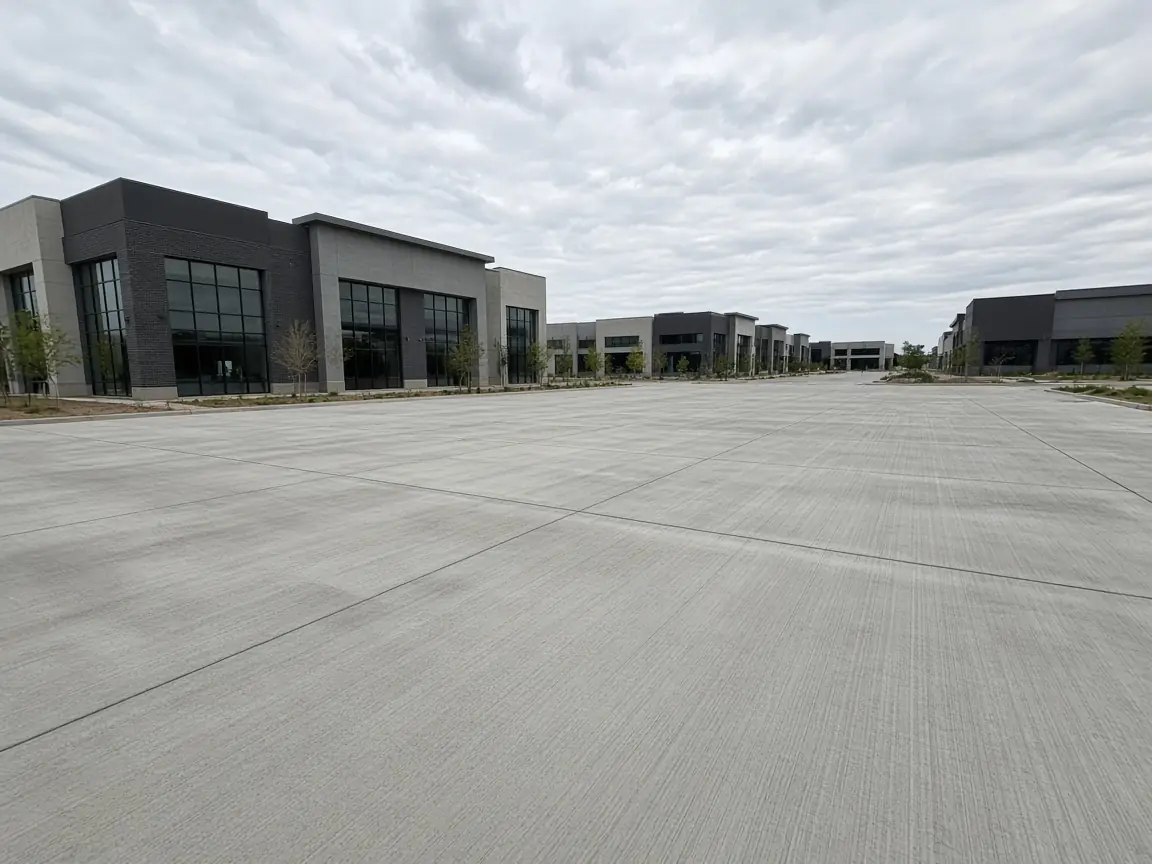
ADA walkways and ramps
Accessible routes have strict slope and surface rules. We build to those rules, and we check them before the concrete sets.
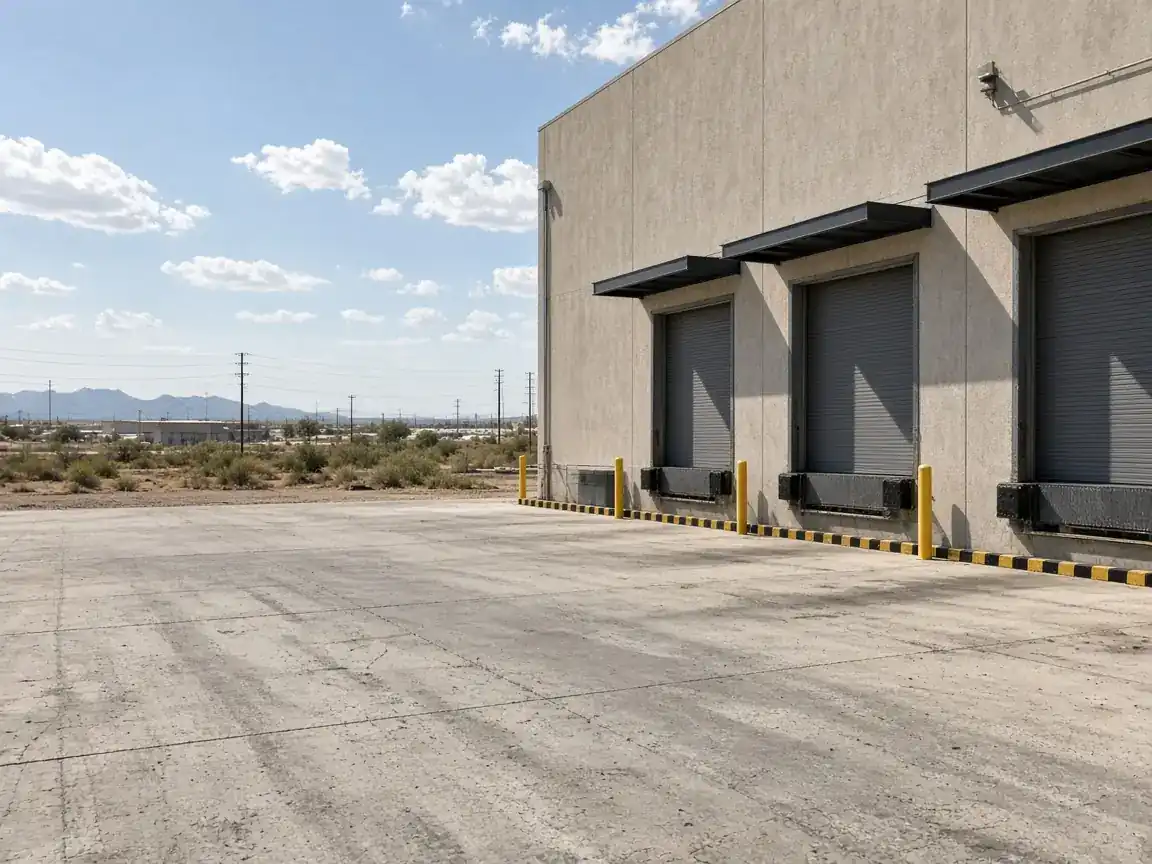
Dumpster pads and enclosures
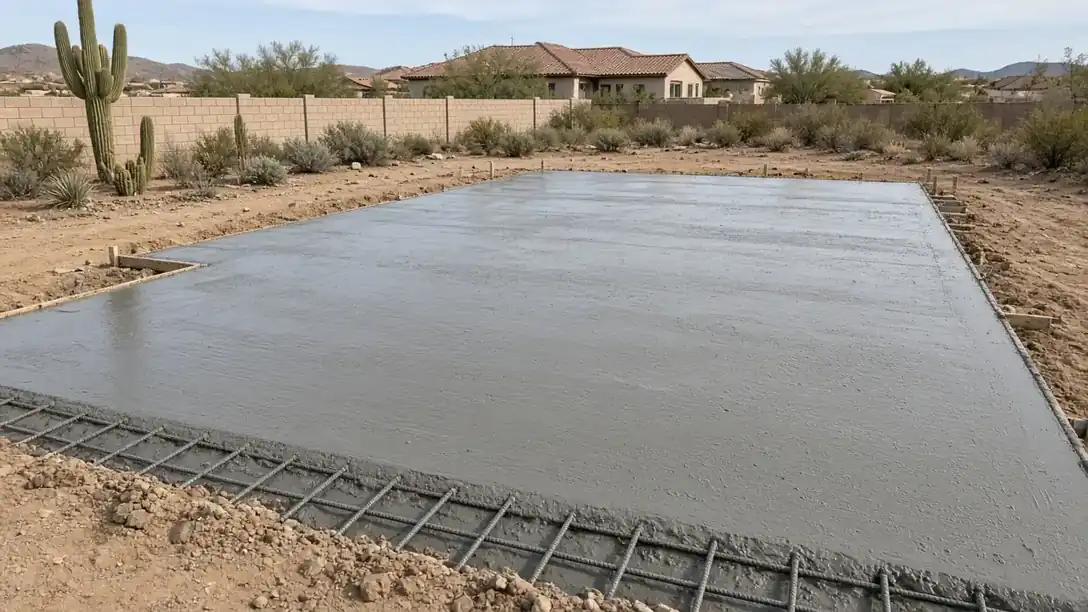
Trash trucks are heavy and hit the same spot every week. Pads need thickness, reinforcement and clear approach slabs.
Loading areas and aprons
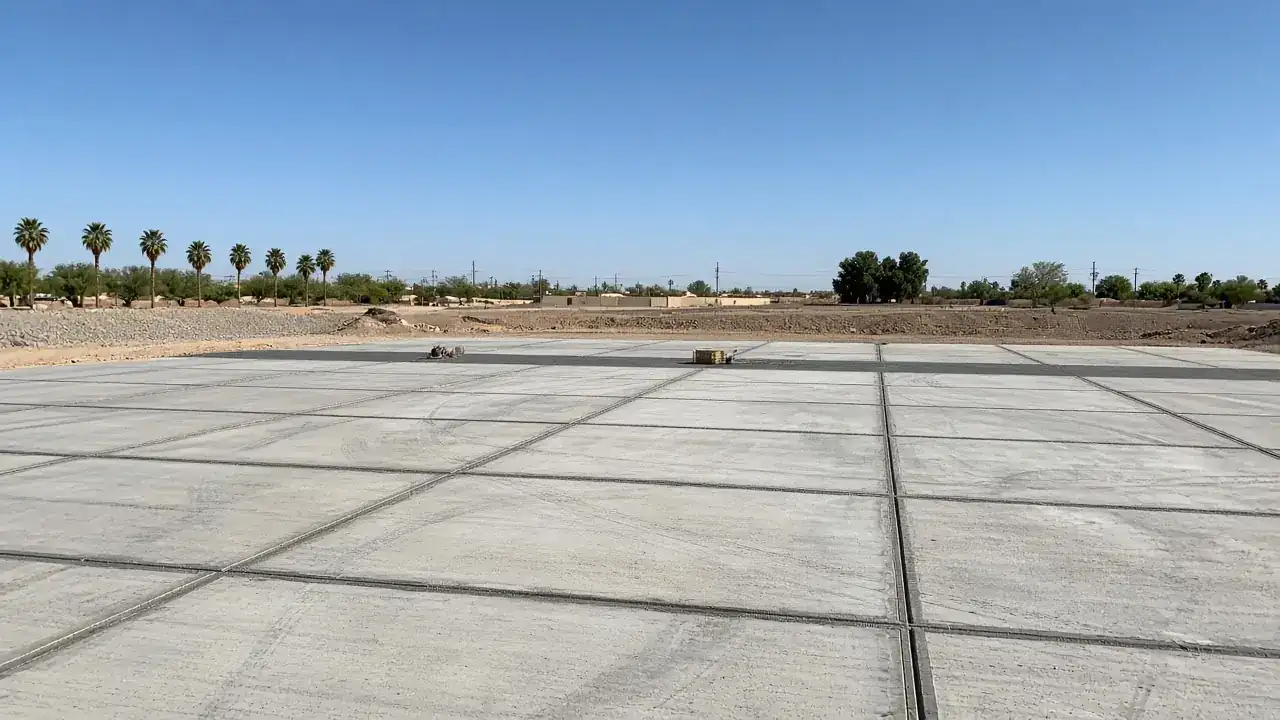
Delivery trucks and forklifts wear concrete fast. We build for the heaviest wheel load, not the average one.
Service yards and equipment pads
Storage, mechanical units and utility pads need solid, level slabs with drainage.
Reinforced commercial slabs
Heavier loads need a designed slab. Scope of structural slab work we take on: scope is confirmed after a site review.
Repairs and replacement
Not every failure needs a rebuild. See concrete repair for cracks and settlement, and parking lots for lot panels.
How do you work around an open business?
We plan around your hours, not ours. Commercial work usually runs in phases, so part of the site stays open while another part is poured. We hold at least one entry open when we can. We mark open hazards the same day and schedule noisy work for off-peak hours.
Phasing
We split the job into sections. One entrance stays open while we work on the other.
Scheduling
Early starts, evenings and weekends can keep customers and tenants moving. Hours we work: schedule is set around access and curing needs.
Barriers and signs
Clear barriers and signs keep people out of wet concrete and away from equipment.
Heat
Phoenix summers shorten the working window. Concrete placed in hot, dry air loses water fast, so we start early and cure right after finishing. The American Concrete Institute publishes guidance on hot-weather concreting.
Cure time
Fresh concrete needs time before it takes traffic. We tell you the closure window before we start. Closure times we plan for: set so the slab or coating can gain strength.
Tell us your hours, your access points and what must stay open. We build the schedule from that.
What do ADA concrete routes require?
Accessible routes follow the federal 2010 ADA Standards. Two limits matter most on a walkway. The running slope can be no steeper than 1:20. The cross slope can be no steeper than 1:48.
Ramps are steeper, up to 1:12, and need landings and handrails. Small changes in level are limited, and larger ones need a bevel or a ramp.
Concrete makes these limits easy to miss. A slab that settles a half inch can turn a compliant route into a violation. We check slopes and edges with a level before and after the pour. Property owners should confirm the requirements for their site with their architect or the City of Phoenix.
We build to the plans you provide, and we flag problems before we pour.
Why commercial concrete fails in Phoenix
Load
Delivery trucks, forklifts and trash trucks concentrate weight. A residential slab fails fast under them.
Water
The National Weather Service counts monsoon season from June 15 to September 30. Water that ponds on a lot, a ramp or a loading apron wears the surface and the soil under it.
Heat
Heat and sun harden, dry and crack concrete placed without a plan. The EPA reports that in an Arizona pilot, asphalt-type paving reached up to 152°F at midday. Cool pavements ran 10 to 16°F cooler.
Soil
Much of the Valley sits on caliche, a hard layer that slows digging and leaves uneven support. Other sites sit on clay that swells and shrinks with moisture.
Joints
Missing or badly placed joints let slabs crack at random, and edges chip at the seams.
Commercial concrete across Phoenix
Sites differ by corridor. Near Loop 101, SR 51 and I-17, truck access and loading drive the plan. Warehouse and industrial properties near the I-17 corridor often need heavy-duty aprons.
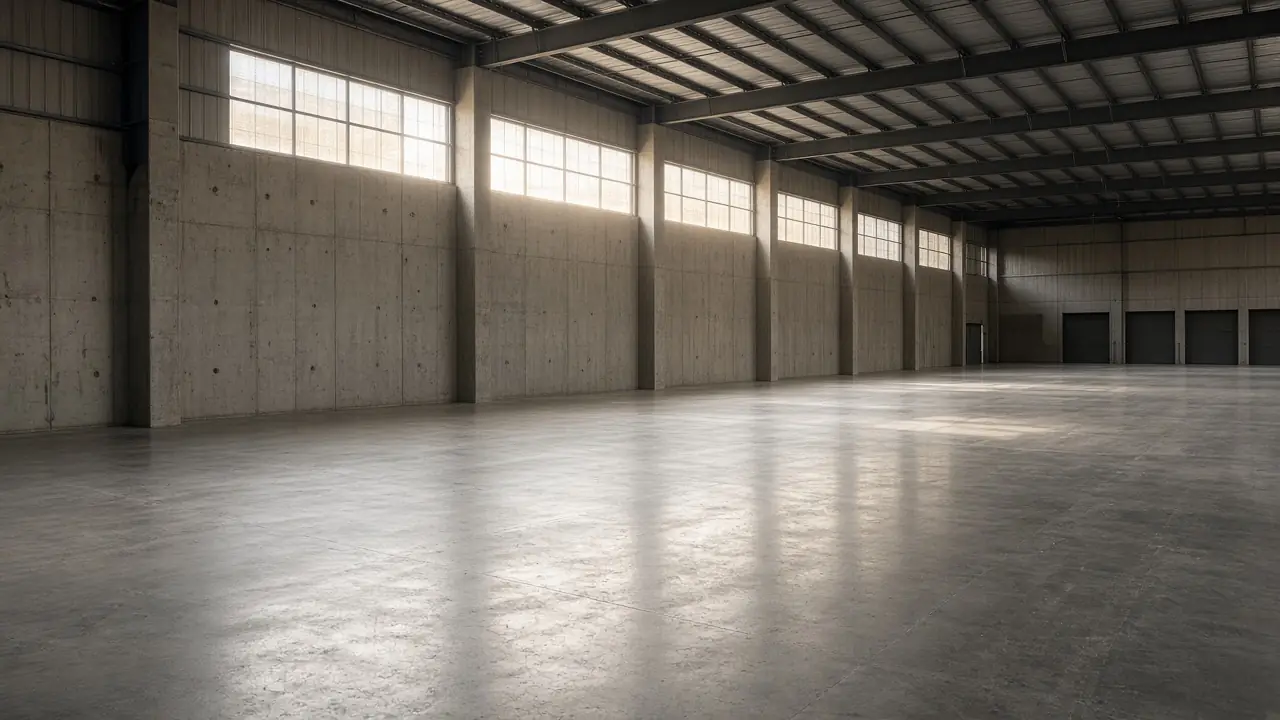
Our warehouse flooring page covers the floors inside. Older retail and office sites may have old flatwork that needs a base test.
Permits and utilities
Work in the public right-of-way, like a sidewalk at the street edge, usually needs a City of Phoenix permit. Larger commercial work may also need plans. Confirm with the City before you pour.
Arizona 811 must mark underground utilities before anyone digs. Call at least two full working days ahead. Maricopa County’s Rule 310 covers dust from construction and earth-moving, whatever the size of the site.
What commercial concrete costs
Area, thickness, reinforcement, access and demolition set the price. So do schedule limits, because night work and phasing cost more than one open pour. Heavy-duty slabs cost more than light-duty ones, and they last longer.
Every job is quoted from a site visit.
What we need to give you a quote
The property type and address
What you want built or repaired, and the approximate size
A short description of the area
Access points, hours and what must stay open
Plans or drawings, if you have them
Your target schedule
The more you send, the faster we can price it.
How a commercial job runs
01
You contact us
Tell us about the property and the work.
02
We look at the site
Access, grade, drainage, utilities and the old concrete.
03
You get a free estimate
It lists the scope, the phasing plan, the materials and the price.
04
We prepare
Utilities marked, demolition, base and forms.
05
We pour and finish
Reinforcement, concrete, joints and finish.
06
We cure and reopen
Typical timeline: a few days on site in typical conditions.
What our customers say
“
Diana Brooks
“We needed a new concrete walkway outside our commercial property in Tempe. The scope needed to account for pedestrian access and the surrounding layout.”
Tempe, AZ · Commercial Walkway
“
Anthony Green
“Our commercial property needed a concrete dumpster pad. We wanted the site requirements and intended use considered before the work began.”
Chandler, AZ · Commercial Dumpster Pad
“
Lauren Bennett
“We were planning concrete improvements around our Glendale business. Access, drainage, and the work schedule all needed to be considered together.”
Glendale, AZ · Commercial Concrete
Frequently asked questions
Related concrete services
Commercial properties rarely need only one service. Warehouse flooring covers interior floors. Parking lots covers concrete lots and curbs. Concrete slabs and foundations covers equipment and structural pads.
Request your free commercial concrete estimate
Tell us about your property and the work. We will get back to you with a free estimate.
Commercial flatwork details